Foot traffic feels flat, and big-box chains and online-only retailers keep getting louder. If you run an independent store, every hour and marketing dollar has to count. The demand is still out there: the National Retail Federation (NRF) forecasts that U.S. retail sales will grow 4.4% to $5.6 trillion in 2026. You're also one of 36.2 million small businesses across all U.S. industries, according to the SBA Office of Advocacy, and all of them want attention. Below are 11 practical ways to grow your retail business, sized for a single store or small chain rather than an enterprise budget.
Quick Take
Start by measuring, because your sales data, website traffic, and customer feedback show which growth moves are worth your time.
Keep your regulars coming back with a simple loyalty program they'll actually use.
Add sales channels beyond your storefront, including your own online store, online marketplaces, and same-day local delivery.
Get found locally with an accurate business listing, a steady social media and email routine, and partnerships with nearby businesses.
Grow beyond your current setup by expanding your product mix carefully, automating routine tasks, and testing new markets with pop-ups.
The most important first step is to know your numbers before you change anything.
Get to Know Your Numbers First
When time and budget are tight, guessing is the expensive option. A new display, a social media push, or a second product line can each eat a month of effort. Without data, you won't know whether it worked. Your existing numbers can tell you where to focus before you spend anything.
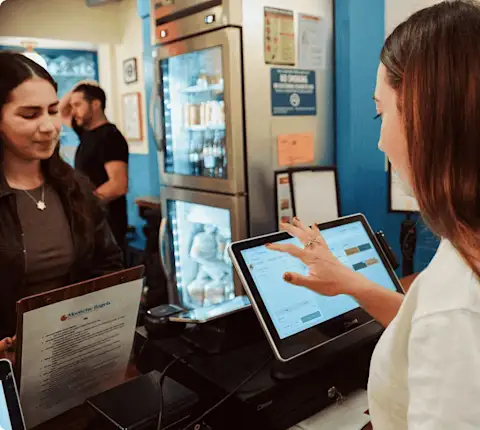
Start with your point-of-sale (POS) system, the hardware and software you use to ring up sales. Most POS systems already track the customer data you need. A quick monthly review might cover:
Your best and worst sellers, by week and by season
Average transaction value and items per sale
Your busiest and slowest hours and days
How many sales come from repeat customers vs. first-time shoppers
Add your website traffic and simple customer feedback, such as a short question at checkout or a comment card by the register. Together, these show you who your target market really is and where they're slipping away. Let what you learn here decide which of the next 10 strategies you try first.
Build a Loyalty Program Worth Joining
Winning new shoppers matters, but keeping the ones you already have usually costs less. A loyalty program gives your regulars a reason to choose you again. The catch is that many shoppers sign up and never come back. The catch is that many shoppers sign up and never come back. That leaves you with one more punch card in a drawer.
A small-store program that actually gets used tends to share three traits:
Simple rules. Shoppers should understand how they earn rewards in one sentence, like "Spend $100, get $10 off."
Real perks. Early access to new arrivals, members-only events, or a birthday discount can feel more personal than points alone.
Clear communication. Use signage at the register, a line on receipts, and a quick mention from staff at checkout.
Your POS system may already include a loyalty feature, which saves you from managing a separate tool. Over time, the program also adds to your customer data. You'll see who buys what and how often, which makes every later marketing decision easier. A strong loyalty program also improves the customer experience, because regulars feel recognized every time they walk in.
Sell Online Through Your Own Website
Your own online store is often the first step beyond the storefront. It lets shoppers browse after hours, check whether you carry an item before driving over, and buy when it suits them. It also gives your brand identity a home online that you fully control.
You don't need a custom build to get started. Many ecommerce platforms offer templates that a small team can set up in days and maintain in a few hours a week. To keep the workload manageable:
Start with your best sellers rather than your full catalog.
Connect the site to your POS system so inventory stays in sync.
Offer in-store pickup, which brings online shoppers into your physical store.
Think of your website as an extension of your brick-and-mortar store, not a replacement for it. Shoppers who find you online can still become regulars in person. Good product photos and honest descriptions also help them feel confident before they ever walk in.
List Your Products on Online Marketplaces
Not every shopper starts on a store's website. Many begin their search on large online marketplaces, category-specific platforms for things like handmade goods or books, or local shopping and delivery apps. Listing there puts your products in front of people who might never have found you otherwise.
That reach comes with trade-offs worth weighing:
Fees. Most marketplaces charge listing fees, a commission on each sale, or both.
Less control. The platform often decides how your products look, how they're sorted, and how much of your branding shows.
Inventory work. Selling the same item in several places means keeping stock counts in sync, or risking orders you can't fill.
Strong inventory management makes this easier. Many POS systems and ecommerce platforms can sync stock levels across sales channels automatically. Start with one or two platforms that match your category, and track whether those sales cover the fees. Adding sales channels this way is a form of diversification: if foot traffic dips, your business isn't relying on a single source of revenue.
Offer Same-Day Local Delivery
Same-day delivery means a customer orders and gets their purchase on the same day, usually within a few hours. For a local store, it lets nearby shoppers buy from you without driving over. It also answers one of the main reasons people choose big retailers instead of local businesses: speed.
That demand shows up in shopper surveys. In an October 2024 survey by Empower, 53% of Americans said they want to get an item as fast as possible, no matter where it comes from. Local delivery lets a small store compete on that front.
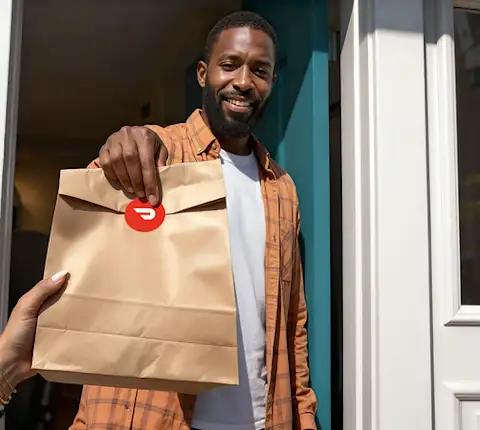
You can offer delivery through your own staff, a delivery service, or an app-based platform. If hiring drivers isn't realistic, retail stores can list on DoorDash and offer Delivery by Dashers, through DoorDash. Treat delivery as one more option alongside your website and marketplace listings. Your storefront stays at the center of the business.
Delivery also brings your store into the neighborhood conversation. For more on how this plays out, see how retail delivery boosts local business.

Grow Your Product Mix the Smart Way
Big-box competitors win on selection, and you can't match them shelf for shelf. You don't need to. A focused, well-chosen product mix can give shoppers reasons to choose you that a giant store can't.
Start with complementary products, items that naturally go with what your customers already buy. A stationery shop might add desk organizers. A beauty supply store might add hair accessories or travel-size kits. Your POS data shows which items are often bought together, so you're building on real habits rather than hunches.
Limited collaborations are another low-risk way to expand a product line. Partnering with a local maker on a small-batch item creates something shoppers can't find anywhere else. It can also build buzz on social media.
To avoid overextending your inventory:
Order small quantities of any new item first.
Set a clear sales target and timeframe, such as 60 days.
Keep, reorder, or drop the item based on results.
Your team's product knowledge is part of your mix, too. Staff who can explain the difference between two products, or recommend the right one, turn your shelves into an advantage that bigger stores often can't offer.
Get Found in Local Search
Search engine optimization (SEO) is the practice of making your business easier to find when people search online. For a local store, it often decides whether a nearby shopper finds you or a chain down the road. Most of the basics are free or low-cost.
Focus on these steps first:
Complete your business listings. Fill in every field on the major search and map listings: category, address, phone number, and website.
Keep hours current. Update them for holidays and seasonal changes, because wrong hours can cost you a visit and a customer's trust.
Add good photos. Show your storefront, your interior, and your best products so shoppers know what to expect.
Ask for reviews and respond to them. Thank happy customers and address complaints calmly and quickly.
Make sure your store name, address, and phone number match everywhere they appear online. Consistent details help search engines trust your listing. They also reinforce your brand identity each time a shopper sees your store in results.
Stay Top of Mind With Social Media and Email
Social media and email marketing keep your store in front of people between visits. The key is a routine your team can actually keep. Posting daily for two weeks and then disappearing does less than posting steadily twice a week.
Lead with what shoppers already value about small stores. In ICSC's 2022 Small Business Consumer Survey, 49% of small-business shoppers said they enjoy the quality of goods and services, and 47% said they enjoy the convenience. Your content can show both: new arrivals up close, staff picks, and easy ways to shop.
A simple marketing plan for a small team might look like this:
Two or three social media posts a week, mixing products, behind-the-scenes moments, and customer favorites
One email a month to your list, with new arrivals, an upcoming event, and a loyalty reminder
A sign-up sheet or QR code at the register to grow your email list
You don't need complex marketing strategies to see results. Consistency matters more than volume, so pick a schedule you can sustain.
Put Technology and Automation to Work
Automation can take routine tasks off your plate without adding headcount. Small retailers aren't behind here, either. According to the U.S. Chamber of Commerce's 2025 Empowering Small Business report, 99% of small businesses use at least one technology platform. Adding a few targeted tools is about catching up with peers, not adopting something exotic.
A few low-lift options to consider:
Inventory alerts. Many POS systems can notify you when stock runs low, which supports better inventory management and fewer empty shelves.
Simple chatbots. A chatbot on your website can answer common questions about hours, returns, or stock 24/7.
AI-assisted product recommendations. Some ecommerce platforms suggest related items to online shoppers automatically, similar to what a staff member might do in person.
Start with the task that eats the most of your time each week. Test one tool, measure the time saved, and decide whether to keep it before adding another.
Partner With Other Local Businesses
Reaching new local customers doesn't have to mean a big ad budget. Nearby businesses already have the audience you want. Partnering with them lets you cross-promote and share the cost of reaching new people.
Look for businesses that serve a similar customer but don't compete with you. A bookstore and a coffee shop are a classic pair, and so are a home goods store and a local interior designer. A few ways to work together:
Shared events. Host a joint evening shopping event, workshop, or seasonal market.
Bundled offers. Combine products or services into one package, such as a gift set featuring items from both businesses.
Referral swaps. Display each other's flyers or offer a discount to customers who come from the partner business.
Partnerships like these build goodwill in the community. They also make your store part of a local shopping route rather than a single stop.
Test New Markets With Pop-Ups Before Expanding
A second location is a big commitment of money, time, and staff. Before you sign a lease, pop-up shops and seasonal setups let you test a new neighborhood or audience at a fraction of the risk.
Options range from a booth at a weekend market to a short-term space in a busy shopping area. You might also set up a table at a community event or a partner business. Each one shows whether a new target market responds to your products.
To keep a pop-up from straining day-to-day operations:
Bring a focused selection of best sellers rather than your full inventory.
Use a mobile POS system so every sale is tracked alongside your store's numbers.
Staff it with your most experienced team member, or schedule it during your store's slowest hours.
Use clear signage that points people to your main store and online store.
Afterward, compare the results with your store's numbers. Strong sales and new email sign-ups can signal real demand. Weak results cost you a weekend, not a lease.
Reach More Local Shoppers With Same-Day Delivery on DoorDash
DoorDash has over 56 million monthly active users (MAUs).* Listing your store can help you reach customers in your area and compete with online-only retailers on speed, without changing how your store runs day to day. It also gives you another channel that can add another way to sell, even when foot traffic is slow.
There's no need to hire delivery drivers or manage a fleet, because orders are handled with Delivery by Dashers, through DoorDash. You sell under your own branding and control your catalog and pricing. If you sell on Shopify, setup can move quickly: DoorDash integrates with Shopify in under 3 days on average.**. To join, retail stores need a physical location and at least 250 products, each with a photo, description, and price. You can learn more about how retail delivery works on DoorDash.
Lakesha Lymon-Ellerbee, owner of Kesha Beauty Supply in Douglasville, Georgia, added delivery to her beauty supply store.
"As long as you're serious about doing the work and fulfilling orders for your customers, DoorDash is an amazing entity to have. It's the mobile convenience you didn't know you needed. With a business like mine, you'd be kind of crazy not to do it."
*Based on the combined amounts for DoorDash, Wolt, and Deliveroo, measured as of December 2025.
**Based on total Shopify-integrated Merchants starting integration for DoorDash between May 19, 2026 and August 13, 2026