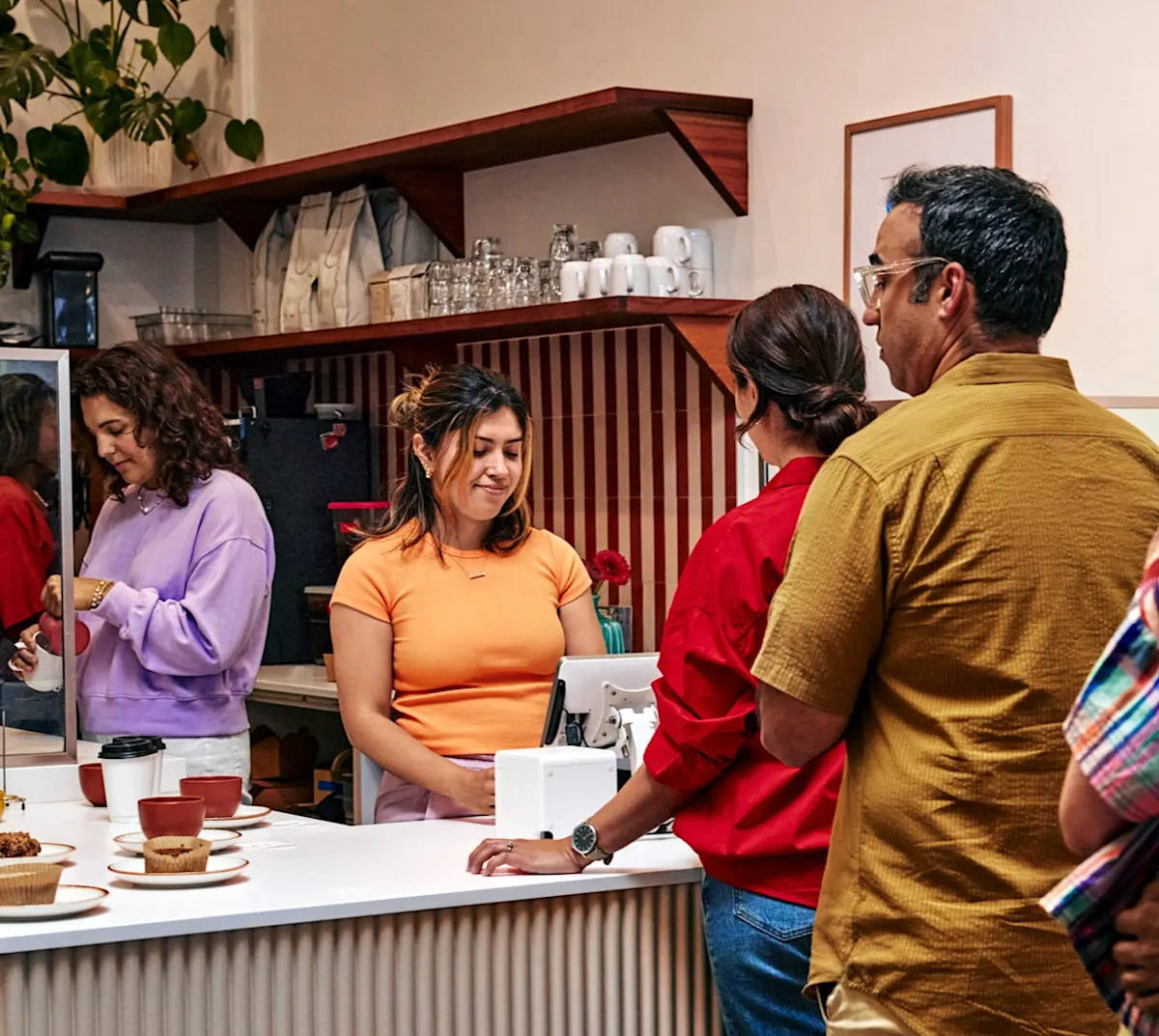
What you need is a verified system. You need 15 proven ideas that work, prioritized so you know where to start. These restaurant strategies to attract a customer base fall into three stages: customers find you, they choose you, and then they return to you. Each stage feeds the next. Read on to find out what they are and why you need to start implementing them into your restaurant business.
Why Most Restaurant Customer Acquisition Tactics Fail (And How to Fix It)
Most of these tactics work fine on their own, but fail because of timing. If a restaurant launches a loyalty program before anyone knows the place exists, there's no audience to enroll. If a restaurant owner pays for ads that route traffic to a menu with no photos, visitors will only browse for a few seconds before leaving.
The pattern is the same in both cases: spending at the wrong stage. You can't retain customers you haven't acquired, and you can't convert people who've never heard of you. When the effort doesn't match where the restaurant actually stands, the budget dissipates with little to show for it.
The solution is following the right sequence. Spend on the stage you're in now, not the one you hope to reach.
Understanding the Customer Journey: Discovery, Conversion, Retention
Sarah pulls out her phone and searches "best tacos near me." Your restaurant shows up in the results, and she scrolls through the menu, reading a few descriptions and looking at the photos. The page loads fast, the food looks good, so she orders.
Three days later, a welcome email lands with 10% off her next order. She uses it, joins your loyalty program, and over the next six months, she's ordering every couple of weeks.
That arc moves through three crucial stages: discovery, conversion, and retention. However, real-life customers rarely move from discovery to repetition so linearly. Someone might find your restaurant on DoorDash, forget about it, then rediscover you through a friend months later.
As you can see, the path bends, but it always passes through the same three points. Your job is to show up well at each, so a customer who wanders off still has a clear path back.
Ideas 1-5: Make Your Restaurant Easy to Find
51% of consumers find restaurants through Google search, while delivery app discovery accounts for 37%*. The first five ideas cover restaurant strategies that attract more customers when those customers are already looking for somewhere to eat.
An added bonus: most cost time rather than money, and a few cost nothing at all.
*Statistics sourced from DoorDash and SevenRooms 2026 Restaurant Industry Trends Report
Idea 1: Claim and Optimize Your Google Business Profile
Your Google Business Profile, or GBP, is your restaurant's free listing on Google Maps and local search. For a local restaurant, it's one of the most effective places to start, because it's free, takes about half an hour to set up, and puts you in front of people searching for a place to eat right now.
Claim your profile at business.google.com and verify that you own the restaurant.
Fill in every field: name, address, phone, hours, website, and a link to your menu.
Upload at least 10 photos that show the exterior, the interior, your food, and your team.
Write a short description that names your cuisine and your city.
From there, maintenance runs about 10 minutes a week: post an update with a special or event, and reply to every review within a day or two.
Is your online presence thin right now? Start here — it works. About 42% of local searchers click on a result in the Google Map Pack, the cluster of three businesses Google shows at the top of local results.
Idea 2: List on DoorDash Marketplace to Reach Ready-to-Order Customers
New listings face some hurdles: no traffic, no reviews, no momentum. DoorDash Marketplace places you in front of customers who are browsing for food right now, with their payment details already saved. Since it’s an additional channel (not a replacement for what you already have), you can reach a built-in audience while continuing efforts to get customers to order from you directly.
It’s a great way to build repeat guests, as well. In their first month on DoorDash, new merchants received over 20% of orders from repeat consumers, and by month three, repeat consumers made up nearly 40% of orders.
It also feeds your other channels. Among consumers who dine in, 74% later order delivery from the same restaurant, and 62% who order delivery later come in to dine*. A customer who finds you one way tends to find you again another way.
Once you're listed, you can widen your reach with new promotional ideas or Sponsored Listings, which return a median of $4 for every $1 spent.
Idea 3: Build Local SEO for "Near Me" Searches
Local SEO, short for search engine optimization, shapes your website so it ranks in local search results. When executed correctly, your restaurant will rank on the first page when someone types a high-intent query like "best pizza near me" or "Thai delivery" plus your city.
Which is exactly what potential customers are Googling when they’re ready to order.
Here are three tactics to incorporate immediately for better search results:
Add your location and cuisine to your website's title tags, headings, and body copy, so Google understands where you are and what you serve.
Build backlinks (links to your site from other trusted sites) by listing your restaurant in local directories like Yelp and TripAdvisor, your Chamber of Commerce, and area food blogs.
Keep your NAP consistent (Name, Address, and Phone number), making sure they read identically wherever they appear online.
Results usually take three to six months, but a strong ranking holds once you earn it, which makes local SEO one of the highest-return digital channels over time.
Idea 4: Partner with Local Businesses and Sponsor Community Events
Local partnerships trade visibility. You bring food or sponsorship to someone else's event or audience, and they send customers your way.
Some considerations that have proven successful:
Sponsoring a Little League team with your logo on the jersey, which puts you in front of 20 to 30 families a season.
Catering a Chamber of Commerce or Rotary Club meeting, where the room is full of local decision-makers.
Partnering with a non-competitive business nearby, like a brewery and restaurant happy-hour bundle, or a lunch deal with a fitness studio.
Participating in themed nights or offering food at live music concerts guarantees a wide audience.
A rough budget can run around $50 to $200 a month in donated food or sponsorship fees. It works best once Ideas 1 through 3 are in place, so the new attention lands on a presence that's ready for it.
Idea 5: Leverage Word-of-Mouth with a Referral Incentive
Friends and family are one of the most common ways people find a new restaurant. Around 61% of consumers discover new places through friends, family, and co-workers. The catch is that word-of-mouth doesn't happen on its own, so you need to nudge it along with a simple referral program.
Here’s how: Give an existing customer a code or link worth $10 off a friend's first-time order. When that friend orders, the referrer earns $10 off their next order too; rewarding both sides drives more sharing. Track the codes through your POS or Online Ordering system. Pay only when a referral converts, to keep your cost per new customer right around $10.
Referrals should send people to a presence that already looks sharp. To run it without the manual tracking, DoorDash Commerce Platform's online ordering and branded website can create and manage referral codes for you.
Ideas 6-9: Convert Browsers Into Paying Customers
Turn visits into orders. A customer spends maybe 30 to 60 seconds weighing you against another restaurant; this is your window to make or break the sale.
If a potential new customer doesn’t follow through, the food is rarely the issue. More often, the menu, the photos, or a clunky checkout cost you the order. Four creative marketing ideas below remove those snags, and they assume Ideas 1 through 5 are working, and traffic is coming in.
Idea 6: Write Menu Descriptions That Sell
Your menu is a sales tool, and 93% of consumers have chosen an item based on a detailed, appealing description*.
Name the main ingredients, the preparation, and the portion size.
Add sensory words like crispy, tender, or wood-fired.
Note allergen and dietary details, since many guests look for them before ordering.
Flag standouts with a "chef's favorite" or "most popular" tag.
Keep each description to about 15 to 25 words.
Instead of "Tacos," try "Slow-braised carnitas tacos with fresh cilantro, pickled onions, and house-made salsa verde, served with lime and your choice of corn or flour tortillas (3 per order)."
Online Ordering from DoorDash Commerce Platform pulls your menu straight from Marketplace, so one edit updates every channel at once, and can increase sales by up to 8%*.
Idea 7: Add High-Quality Photos to Every Menu Item
Guests are strongly influenced by photos. DoorDash found that 87% of consumers said they picked what to eat after seeing an appealing photo or video, and covering at least half of your menu with photos on DoorDash raised sales by 13% on average*.
Shoot near a window in daylight, with no harsh flash or filters.
Frame each dish from overhead or at a 45-degree angle.
Show the real portion, texture, and plating, so the photo matches what arrives.
Take three to five angles per dish and keep the strongest.
A full menu takes about two to three hours. DoorDash's AI-powered camera tool saves time with one-tap capture and instant approvals.
Idea 8: Optimize Your Website for Mobile Ordering
Almost everyone orders on a phone now. Our 2026 DoorDash report found 95% of orders are made by mobile, so a desktop-only site loses customers at the moment they're ready to buy. Download this website checklist and look over the following:
Pages load in under three seconds (test free with Google PageSpeed Insights).
Buttons are big enough to tap without zooming, around 44 by 44 pixels.
A clear "Order Now" button sits high on the page, before anyone scrolls.
The menu breaks into clean sections, not one endless list.
Checkout runs three steps: cart, info, and payment.
DoorDash Commerce Platform's branded website is built mobile-first, with sub-two-second load times, Schema markup for search, and the backend is handled for you. Ordering remains commission-free, with payment processing at 3.3% plus $0.30 per transaction.
Idea 9: Make Checkout Frictionless with Saved Payment Options
Conversions can leak during checkout. Every extra step and surprise charge gives a customer another reason to abandon the cart. Here are three ways to fix that:
Save payment methods so returning customers skip re-entering card details.
Offer Apple Pay and Google Pay for one-tap ordering.
Show every fee upfront, so nothing surprises them at the end.
Shorter, transparent checkout flows convert better than long ones with hidden costs. DoorDash Commerce Platform's Online Ordering includes guest checkout, saved payment, and digital wallet support out of the box.
Ideas 10-15: Turn First-Time Customers Into Regulars
Bringing in a new customer costs far more than keeping one you already have. The six ideas below build systems that bring customers back automatically, without constant discounts, and they assume Ideas 1 through 9 are already pulling customers in.
Idea 10: Launch a Cross-Channel Loyalty Program
Most diners want a loyalty program, with 90% saying they'd use one that spans both reservations and delivery. The payoff is significant, since 66% of consumers order more often from restaurants where they hold a membership*. A program that earns repeat orders tends to share three traits:
A simple structure, like buy nine and the tenth is free, or spend $100 and earn $10.
One that works everywhere: in-store, online, and on delivery.
Easy to use, with automatic enrollment and points that customers can check from their phone.
Cross-Channel Loyalty lets customers earn and redeem points whether they order on DoorDash, your website, your app, or in-store. When someone orders through DoorDash and joins, you capture their information and can bring them back through your own channels next time.
Idea 11: Automate Email Marketing to Stay Top of Mind
Email marketing for restaurants gives you a channel you fully own, with no algorithm interference. To make it work, you first need to build an email list of customers who want to hear from your restaurant. Capture sign-ups through direct orders, loyalty enrollment, and your website, then use that audience to power automated campaigns that bring customers back. Three automations do most of the work, each triggered by a customer's behavior:
A welcome series three to five days after a first order, with thanks and 10% off the next one.
A win-back series after 45 quiet days, with a short "we miss you" and a limited-time offer.
VIP recognition after five orders, with a perk or early access to new items.
Once set up, they run on their own with no ongoing work. Setup takes about two to three hours, and Automated Email Marketing comes with pre-built campaigns that boost order frequency by an average of 15% among new and returning customers*.
Idea 12: Personalize Offers Based on Order History
Recognition keeps people coming back, and 65% of loyal customers say a restaurant remembering their preferences affects how often they order*. A better customer experience for restaurants often starts with using the data you already have to make each interaction feel more relevant and personal. Personalization here is a form of service, built on data you already have:
Someone who orders tacos every Tuesday gets a "Taco Tuesday" reminder.
Anyone quiet for 30 days receives a "we miss you" note featuring their usual order.
The goal is to use order history and signup details to make each customer feel recognized. One catch: on DoorDash Marketplace, DoorDash keeps that data, while your direct channels through DoorDash Commerce Platform give you ownership of it. Marketplace builds the audience, and DoorDash Commerce Platform helps you own and activate it.
Idea 13: Generate and Respond to Online Reviews
Reviews work as both a ranking factor and a trust signal, and they move revenue directly. A one-star rise in a restaurant's average rating drives 5 to 9% revenue growth, according to a report by Harvard Business School. The loop is straightforward:
Ask right after a good experience, not at checkout.
Make it easy with a QR code on the receipt or a post-order text linking to Google or Yelp.
Respond within a day or two, thanking the positive ones and answering the critical ones without getting defensive.
Responding regularly signals to Google and Yelp that you're active, and a steady stream of new reviews counts for more than a high total sitting still. All of it is free. Guest experience management automates the requests, consolidates your feedback in one dashboard, and drafts responses to save you time.
Idea 14: Share Behind-the-Scenes Content on Social Media
Social media keeps you top of mind. Its payoff is slower but significant; QSR Magazine found that 74% of consumers who actively engage with restaurants on social media are more likely to visit. Here’s what tends to work:
Three to five posts a week on Instagram or TikTok, like food highlights, team spotlights, and kitchen prep.
Two to three a week on Facebook, like events and community news, using a few local hashtags so nearby diners find you.
Batching a week of posts takes 30 to 60 minutes and runs on free tools or a low-cost scheduler. Treat it as brand awareness upkeep, so you stay in mind for the moment a customer is ready to order.
Idea 15: Put All Your Tools in One Place with DoorDash Commerce Platform
Most restaurants run several disconnected systems for Marketplace, website, email, loyalty, reviews, and social. Every menu change means updating each one individually, and every new customer lands in a different database, which makes the full picture of customer behavior nearly impossible to see.
DoorDash Commerce Platform integrates everything into one system: Online Ordering, branded website, Automated Email Marketing, branded mobile app, and Cross-Channel Loyalty. Update your menu once, and it syncs everywhere, and customer data collects in a single place.
Real life example: Fishhook Seafood in Ontario, Canada, found that loyalty customers who signed up on the web spent 33% more than non-loyalty customers.
How to Prioritize These 15 Ideas Based on Your Restaurant's Current Stage
Use these stages to build a restaurant marketing plan around the priorities that matter most for your business right now. Most restaurants fall into one of four.
Stage 1 (Weeks 1-4): Be Findable Online. If you have no website, a weak Google presence, or you're not listed where customers search, start here. Focus on Ideas 1 (Google Business Profile), 2 (DoorDash Marketplace), and 3 (local SEO basics).
Start showing up where customers are looking.
Stage 2 (Months 2-3): Convert Browsers Into Orders. If traffic is coming in but few people order, this is your gap. Focus on Ideas 6 (menu descriptions), 7 (photos), 8 (mobile optimization), and 9 (checkout friction).
Turn that traffic into revenue.
Stage 3 (Months 4-6): Build Repeat Business. If you're landing new customers but they order once and disappear, this is your bottleneck. Focus on Ideas 10 (loyalty program), 11 (email automation), 12 (personalization), and 13 (reviews).
Raise the value of each customer over time.
Stage 4 (Month 6+): Amplify What's Working. Once the core systems run on their own, add the amplification layer. Focus on Ideas 4 (local partnerships), 5 (referrals), 14 (social media), and 15 (a unified system).
Scale without piling on complexity.
Common Mistakes That Waste Time and Money
A few predictable mistakes undo good intentions. Avoiding them saves you the time and money most restaurants lose learning the hard way.
Trying to implement all 15 ideas at once
Pick three to five, run them all the way, then add the next batch. Half-building 15 tactics rarely moves your numbers, while fully executing five often does.
Counting likes instead of orders
Instagram followers and website traffic don't pay the bills. Track orders, repeat rate, and average order value, and let the vanity numbers go.
Building your business entirely on platforms you don't control
Leaning only on Marketplace, Instagram, or Google is a risk, since algorithms shift and fees climb without your say. Owned channels like your website, email list, and loyalty program protect you when that happens.
The demand is already there: 64% of consumers want a single app for delivery, pickup, and reservations, which is why more operators are turning to integrated tools like DoorDash Commerce Platform*.
How to Measure What's Working
You don't need a dashboard full of numbers. A handful of metrics track closely with revenue, and most of them live in tools you already have: your POS, your Google Business Profile dashboard, or the Merchant Portal if you're on DoorDash Commerce Platform.
Online orders per week (direct and Marketplace): the clearest signal of momentum. Watch the week-over-week trend rather than any single number.
Repeat customer rate (the share ordering two or more times): the industry average sits around 30%, while the best-run restaurants reach 70 to 80%*.
Average order value: the typical amount spent per order. Track which direction it moves over time.
Customer lifetime value: total revenue from a customer across 12 months. This tells you what each new customer is actually worth to the business.
Email list growth: new subscribers per month, a measure of how well you're capturing customers for direct contact.
Google Business Profile actions: calls, direction requests, and website clicks, all visible in your GBP dashboard.
Loyalty enrollment rate: the share of customers who join your program, which shows whether your retention engine is filling up.
Pick two or three of these to start. Checking them on the same day each week turns measurement into a habit instead of a guessing game.
Turn Marketplace Momentum Into Owned Customer Relationships
You're already reaching customers on DoorDash Marketplace. The next step is turning that momentum into customer relationships you own, the kind that drive repeat revenue without the commission costs.